Canon EOS R50 V Review: A Dedicated Tool for Solo Creators
We put the Canon EOS R50 V to the test. Discover if this specialized mirrorless camera is the right fit for your vlogging setup or your next content project.
 Mirrorless Cameras
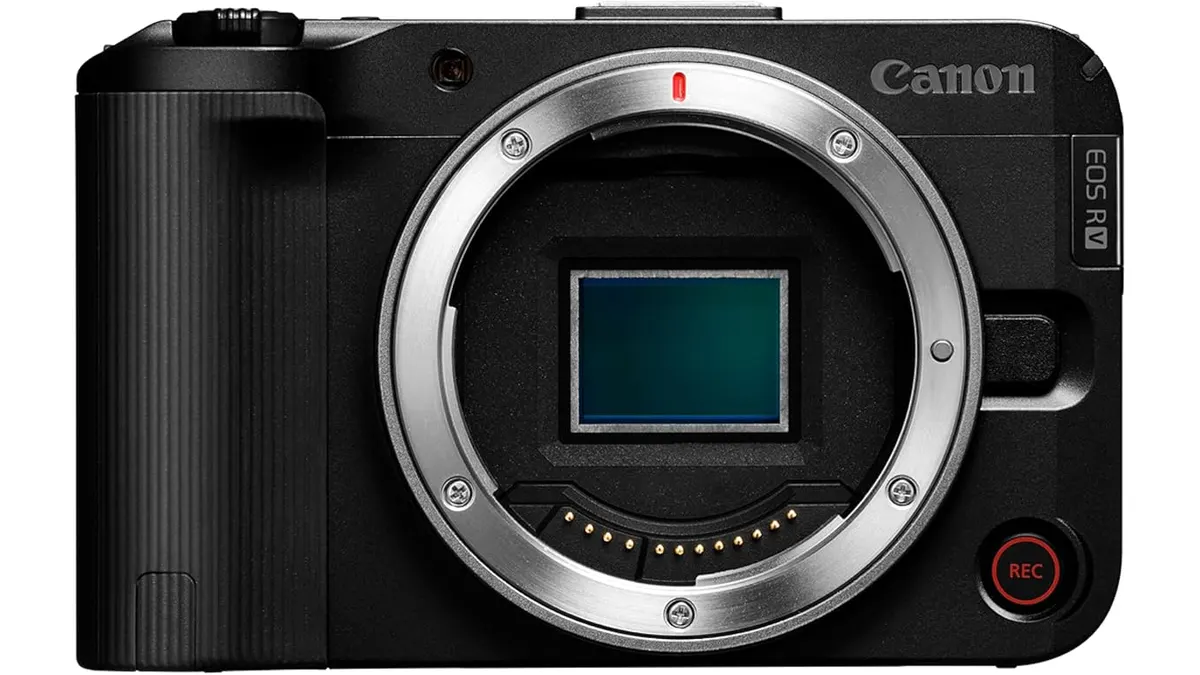
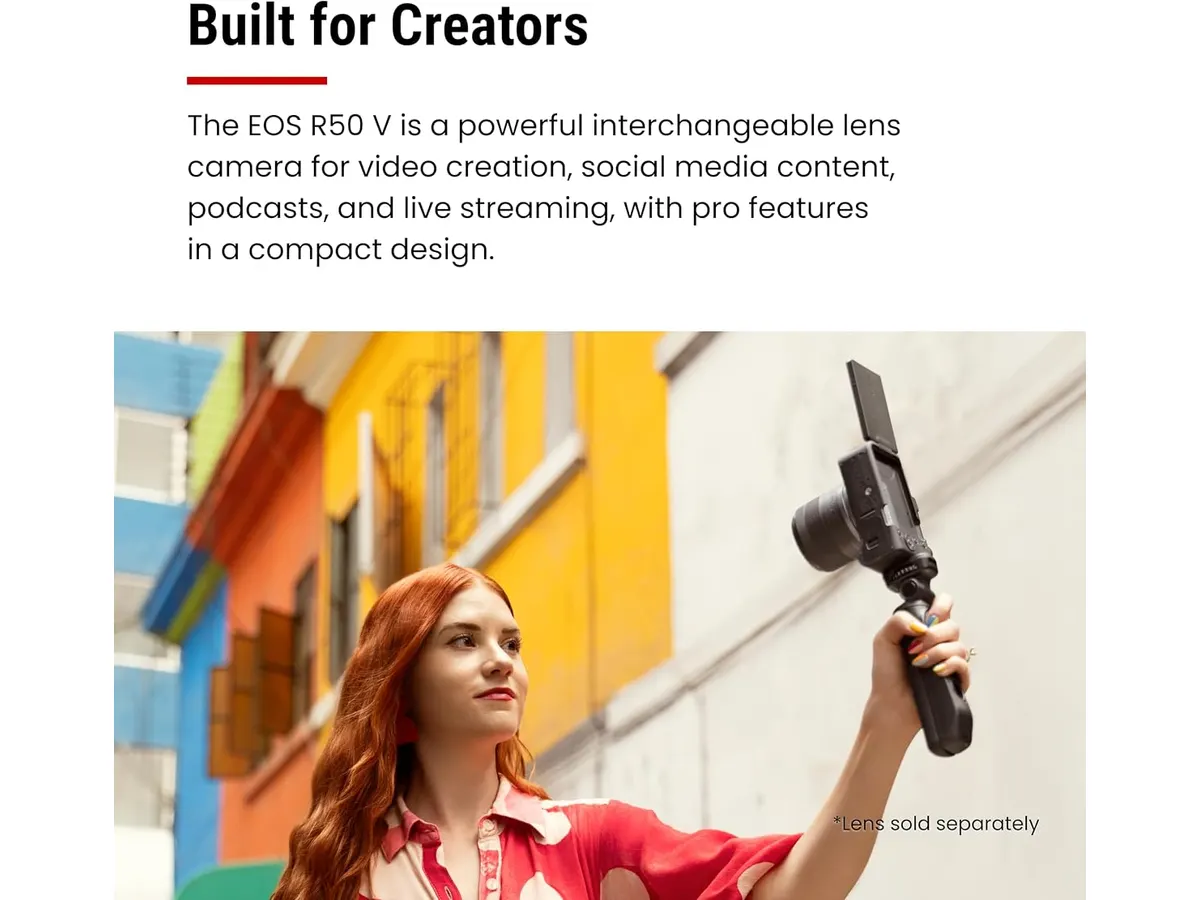
The Canon EOS R50 V lands in a market crowded with hybrid options, but it distinguishes itself by focusing squarely on the vlogger and solo content creator. It isn’t trying to be a cinema powerhouse or a high-end stills rig; it is a streamlined tool designed to make the barrier to entry for high-quality video as low as possible. In this Canon EOS R50 V review, we examine whether its specific feature set justifies its place in your kit compared to other options in our Mirrorless Cameras category.
What it does well
- The Dual Pixel CMOS AF II system is the standout feature here. It provides snappy, reliable tracking for people, animals, and vehicles, which is crucial when you are working as a one-person crew and cannot babysit your focus ring.
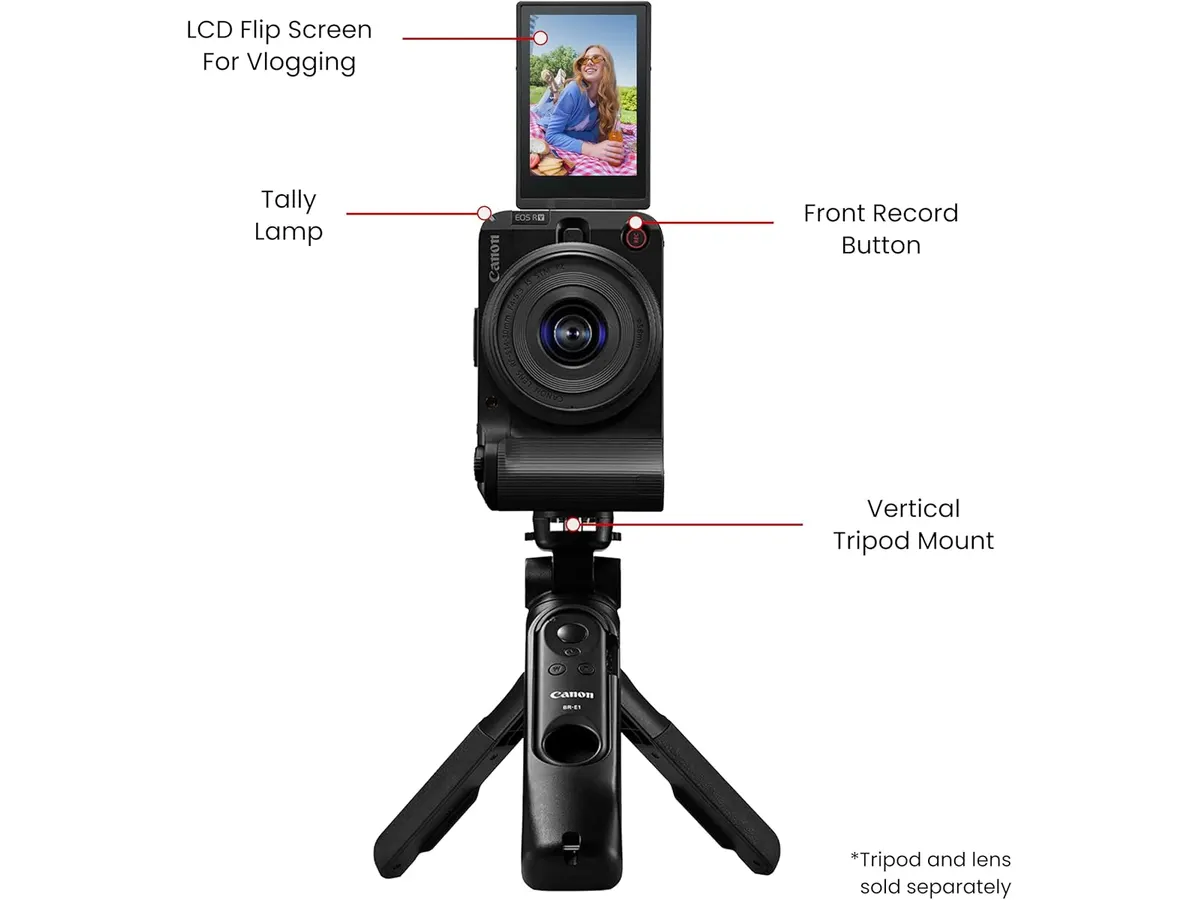
- The inclusion of a dedicated front-facing recording button is a thoughtful touch for creators who frequently talk to the camera. It’s significantly easier to reach than the standard top-mounted shutter release, especially when the camera is on a small tripod or handheld grip.
- The camera offers flexible frame rate options, including 4K at 29.97p for full-width capture and 4K at 59.94p for those who need a bit of slow-motion capability, albeit with a crop. Being able to toggle between these modes for different types of content gives the user a lot of creative runway.
- The vertical tripod mount is an overlooked but vital addition for modern social-first shooters. You no longer need to rely on shaky, unstable adapters to shoot vertical content for mobile platforms.
Key specifications
| Feature | Specification |
|---|---|
| Sensor | 24.2 MP APS-C CMOS |
| Processor | DIGIC X |
| 4K Video | 59.94p (cropped) / 29.97p (full width) |
| Autofocus | Dual Pixel CMOS AF II |
| Subject Detection | People, Animals, Vehicles |
| Physical | Vertical tripod mount, front record button |
Where it falls short
- The most significant compromise is the heavy crop applied when shooting 4K at 59.94p. While the frame rate is useful for action or smooth movement, the reduced field of view makes it difficult to frame yourself when shooting handheld at arm’s length, essentially requiring a wider lens to compensate.
- While the DIGIC X processor is capable, the small form factor of the R50 V body means it lacks some of the robust thermal management or advanced physical controls found on larger, more expensive bodies. If you are accustomed to having quick-access dials for shutter, aperture, and ISO, the menu-heavy interface might feel restrictive during fast-paced shoots.
Who is it for?
This camera is perfect for the lifestyle creator or solo vlogger who needs a reliable, “point-and-shoot” style interface that doesn’t sacrifice image quality. If your primary goal is to get high-quality footage of yourself talking to the camera with minimal setup time, the R50 V is a fantastic choice.
It is not for the professional filmmaker or high-end hybrid shooter who needs extensive external monitoring, advanced bit-depth recording, or a body capable of withstanding heavy, daily professional abuse. If your work involves complex lighting setups and high-end color grading, you should look toward full-frame alternatives like the Sony Alpha a7 IV Review: The Ultimate Hybrid Workhorse for that extra latitude.
Alternatives to consider
For those who want a more robust, professional-grade hybrid experience with better ergonomics for manual control, a mid-tier full-frame mirrorless camera is a better investment. These models provide deeper color profiles and better low-light performance at the cost of increased weight and size. If you want a more balanced approach for hybrid shooting, the Panasonic LUMIX S5 II Review: A Versatile Mirrorless Camera offers a great middle ground for video-centric workflows.
Verdict
The Canon EOS R50 V is a specialized tool that succeeds because it understands its audience. While it won’t replace a full-frame cinema rig, its ease of use and focus on creator-friendly features like the vertical mount and front record button make it a compelling entry point for social media content. For those who prioritize speed and portability, this is a solid addition to our list of recommended Mirrorless Cameras.
Frequently asked questions
Is the 4K crop at 60fps manageable for vlogging?
It is a significant crop, so you will need an ultra-wide angle lens to maintain a comfortable framing for vlogging.
Does the front record button improve workflow?
Yes, it is much more ergonomic for selfie-style shooting than standard top-mounted buttons.
Can this camera handle low-light environments?
It performs adequately for social content, but it will show noise earlier than full-frame sensors in very dim conditions.

Written by
Charly River
Editor & Head of Reviews
I review audiovisual gear by cross-checking official specs, real availability and value for money. No sponsorships: if a link earns a commission, I always say so.
Spotted an error? Email usYou may also like
 Mirrorless Cameras
Canon EOS R6 Review: A Full-Frame Hybrid Performance Workhorse
We tested the Canon EOS R6 to see if its 20MP sensor and DIGIC X processor hold up for professional video and stills. Read our honest take on this hybrid.
 Mirrorless Cameras
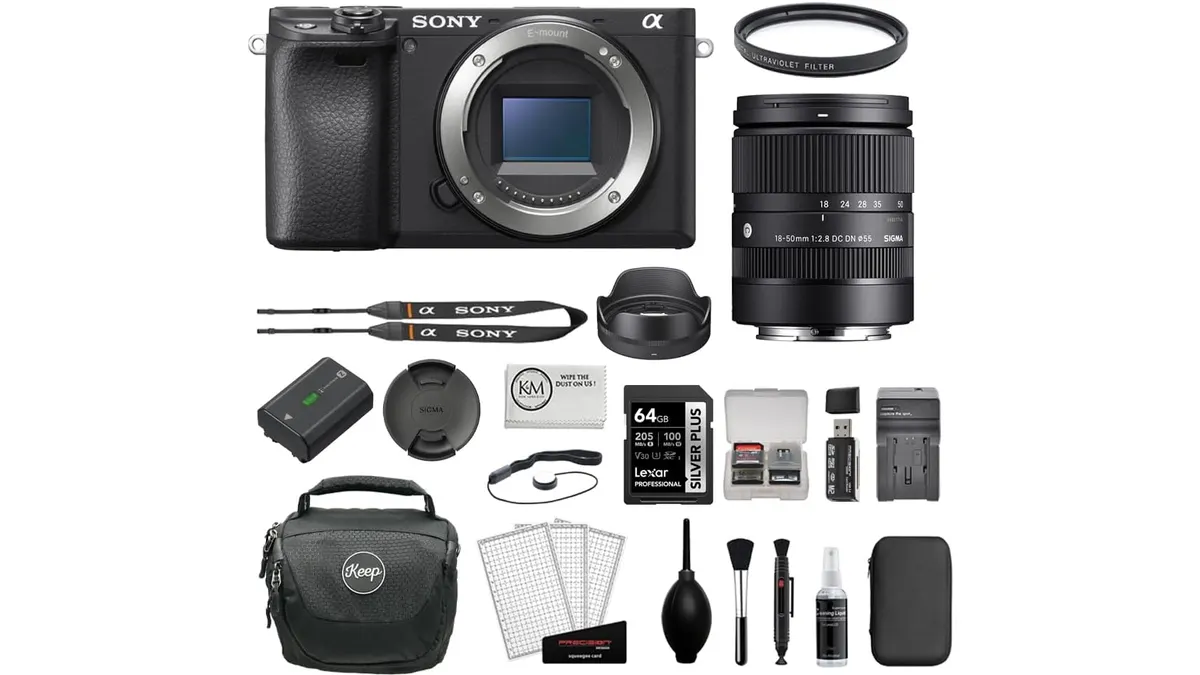
Sony Alpha a6400 Review: Compact Power for Solo Creators
We put the Sony Alpha a6400 to the test. Is this compact powerhouse the right fit for your vlogging or photography needs? Read our honest assessment.
 Mirrorless Cameras
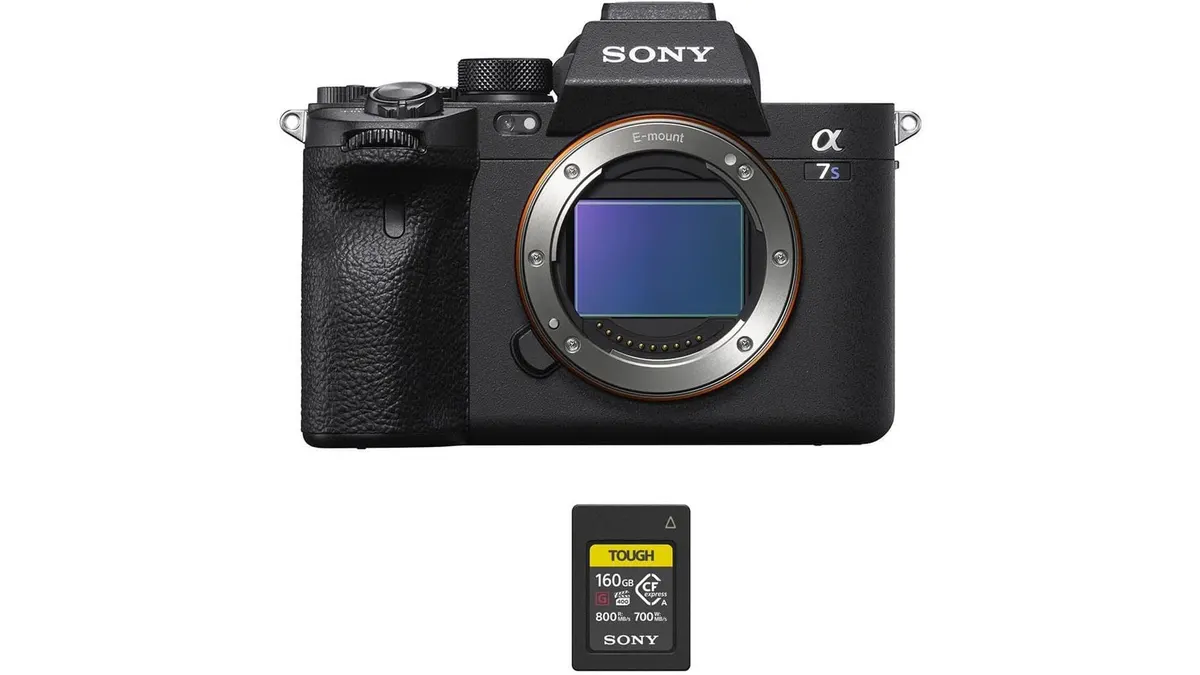
Sony Alpha a7S III Review: High-End Cinema for Solo Creators
Is the Sony Alpha a7S III still the king of low-light video? We dive into the specs, trade-offs, and real-world performance for professional videographers.